Why Some States Are Banning Kratom
Learn why states are banning kratom, what Tennessee’s new law means and what you should know about kratom risks, dependence and withdrawal.

Many people who use kratom are trying to manage pain, mood or opioid withdrawal as safely as they can, often after difficult experiences with the healthcare system or concerns about fentanyl in the drug supply. Their choices are shaped by a desire for relief, stability and control over their health.
Kratom is getting more attention across the United States, but not always for the reasons people expect. It is often marketed as a natural product for pain, energy, mood or opioid withdrawal. At the same time, kratom is raising concerns among regulators, public health officials and clinicians.¹,²
For patients and families, the conversation can feel confusing. If kratom is sold in stores and online, why are some states moving to ban it?
The short answer is that kratom sits in a difficult space between consumer access and public health risk. It is widely available in many places, but it is not approved by the FDA to treat any medical condition.³ Concerns have also grown around product strength, labeling, side effects, dependence, withdrawal and the rise of highly concentrated kratom-related compounds.³,⁴
What Is Kratom?
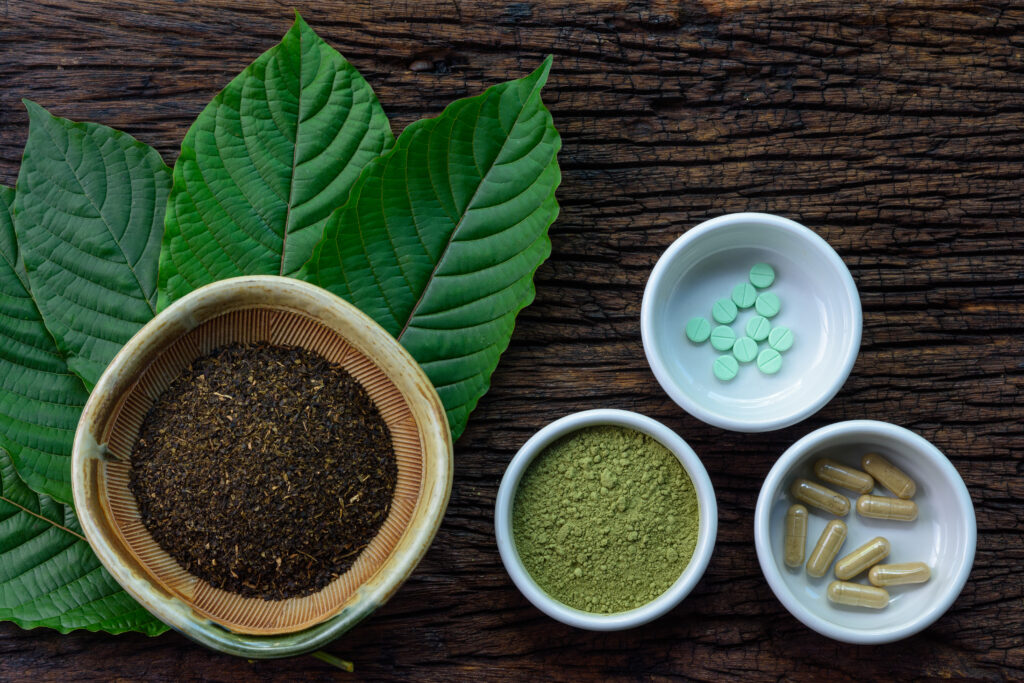
Kratom comes from Mitragyna speciosa, a tree native to Southeast Asia. In the United States, it is commonly sold as powders, capsules, extracts, gummies, teas and drinks.¹,³
The plant contains compounds such as mitragynine and 7-hydroxymitragynine, also called 7-OH. These compounds can interact with opioid receptors in the brain, with mitragynine acting as a partial mu‑opioid receptor agonist and 7‑OH having stronger opioid-like effects, especially at higher or concentrated doses.¹,⁵
That does not mean kratom is the same as prescription opioids. However, it does help explain why some people use kratom to try to manage pain, improve mood or self-treat opioid withdrawal.³ For some patients, that can create a false sense of safety. “Natural” does not always mean low-risk.
Why Are Some States Banning Kratom?
States that ban kratom generally point to several recurring concerns.
Kratom Is Not FDA-Approved
The FDA says there are no approved kratom drug products and no legally marketed over-the-counter drugs containing kratom for medical use in the United States.³
That matters because patients may assume a product is safe, tested or medically validated simply because it is sold openly. In reality, kratom products are not approved by the FDA to treat pain, opioid withdrawal, anxiety, depression or any other medical condition.³
Safety Concerns Remain Unresolved
The FDA has warned consumers about serious adverse events associated with kratom, including liver toxicity, seizures and substance use disorder.³
Some reports of deaths involving kratom also involved other substances, which can make it difficult to determine kratom’s exact role. Even so, the FDA continues to advise against kratom use because of unresolved safety concerns and the potential for serious harm.³
Kratom Products Can Vary Widely in Strength
Kratom is not one uniform product. Powders, capsules, drinks, extracts and enhanced products may vary greatly in strength. That makes it harder for people to know what they are taking or how it may affect them.³,⁵
This is especially concerning for people who buy kratom from smoke shops, convenience stores, gas stations or online retailers where product labeling may be incomplete, confusing or inconsistent.
Concentrated 7-OH Products Have Raised New Concerns
More recently, regulators have focused on products containing concentrated 7-hydroxymitragynine, also known as 7-OH. In 2025, the FDA warned that products containing added or enhanced levels of 7-OH can cause serious harm and may have opioid-like effects.⁴,⁶
This growing concern is one reason some states are moving more aggressively. While 7-OH can occur naturally in kratom in small amounts, products with added or concentrated 7-OH may be much stronger than traditional kratom products.⁴,⁶
Dependence and Withdrawal Can Happen
Some people report difficulty stopping kratom after regular use and withdrawal symptoms can resemble milder forms of opioid withdrawal for some individuals (for example, anxiety, body aches, sweating, sleep problems or nausea)². Research and public health sources have also examined kratom use in connection with co-occurring substance use and mental health symptoms.²,⁶
For clinicians, the concern is not only whether someone is using kratom. It is also how kratom may affect recovery, mental health, withdrawal symptoms and a person’s willingness to seek medical care.
Concerned About Kratom Use?
If you or someone you know is experiencing withdrawal symptoms, cravings or difficulty stopping kratom, BHG offers evidence-based treatment and recovery support.
Which States Have Banned Kratom?
As of the most recent state-law summary, several states have statewide kratom bans, including:⁵
- Alabama
- Arkansas
- Indiana
- Louisiana
- Vermont
- Wisconsin
Tennessee has also passed a statewide ban that is scheduled to take effect July 1, 2026.⁷ Because state laws change quickly, patients and providers should confirm current law before relying on an older list. Some states are banning kratom outright, while others are choosing stricter regulation instead.⁵
For a state-by-state overview and a list of local bans, visit the American Kratom Association’s “AKA in Your State” resource page. Because laws change frequently, always confirm current requirements through official state or local government sources.
Tennessee’s Kratom Ban: What Patients Should Know
Tennessee is the latest state moving from regulation to a statewide ban. In 2026, the state passed Matthew Davenport’s Law, which is scheduled to take effect July 1, 2026. The law makes it a criminal offense to possess, manufacture, deliver or sell kratom. It also adds kratom testing requirements in certain suspected overdose and neonatal abstinence syndrome cases.⁷
The Tennessee ban reflects many of the same concerns driving action in other states, including dependence, inconsistent product strength, use with other substances and the growing availability of concentrated kratom-related products. It also highlights an important risk for people who may be using kratom regularly to self-manage pain, opioid withdrawal or other symptoms.
Because enforcement practices and local ordinances can vary, patients should consult official state or local government sources or legal counsel for specific legal questions. BHG cannot provide legal advice but can help with clinical concerns related to kratom use and withdrawal.
When access changes suddenly, people who are dependent on kratom may experience withdrawal in the days and weeks after the ban, or may return to prescription opioids, illicit opioids such as fentanyl, or other substances to cope with symptoms if they do not have support. Anyone using kratom regularly should talk with a healthcare professional before stopping suddenly or trying to manage withdrawal alone.
Outpatient Treatment and Support After Tennessee’s Kratom Ban
After July 1, some people who have been using kratom regularly may show up in emergency departments, primary care offices, or the justice system with withdrawal symptoms, anxiety, sleep problems, or increased opioid use. Recognizing kratom use and withdrawal is important so patients can be connected to appropriate addiction treatment instead of being dismissed or punished. BHG can accept referrals from healthcare providers, justice partners and families, as well as direct self‑referrals from patients.
Tennessee’s kratom ban may leave some people without the product they have been relying on to manage pain or opioid withdrawal symptoms. That can create a real gap in care. BHG’s role is to help fill that gap safely and ethically by offering evidence‑based treatment, including MOUD, withdrawal management and support for co‑occurring mental health conditions, rather than leaving people to navigate withdrawal or relapse risk alone.

Why Some States Regulate Kratom Instead of Banning It
Not every state has taken the same path. Some states have adopted age restrictions, labeling rules, licensing requirements or concentration limits instead of a full ban.⁵
This reflects a broader policy debate: should kratom be prohibited because of its risks, or regulated more tightly like other controlled consumer products?
For patients, the important point is that legality does not equal safety. A product may be sold legally in one state and still pose health risks, especially if it is concentrated, poorly labeled or used with opioids, alcohol, benzodiazepines or other substances.³,⁴
What Patients Should Know About Kratom
Kratom is often discussed online as if it were a simple wellness product or a harmless alternative to opioids. The reality is more complicated.
Some people may use kratom without obvious short-term problems. Others may experience side effects, withdrawal, worsening mental health symptoms or patterns of use that become hard to stop.²,³
Patients should be especially cautious if they are:
- Using kratom to self-manage opioid withdrawal
- Taking kratom with alcohol, opioids, benzodiazepines or other substances which can increase the risk of overdose or breathing problems
- Needing larger amounts over time
- Feeling sick, anxious or uncomfortable when they try to stop
- Experiencing cravings or withdrawal symptoms
- Avoiding medical care while relying on kratom instead
- Using concentrated extracts, enhanced products or 7-OH products³,⁴,⁶
Kratom may feel like a private way to manage symptoms, but using it without medical support can be risky. This is especially true for people with opioid use disorder, mental health conditions, chronic pain or a history of substance use.
When to Get Help for Kratom Use
It may be time to seek help if kratom use is affecting your health, relationships, work, school or recovery. It may also be time to get help if you feel unable to stop, need more over time or feel sick when you go without it.³,⁶
A clinical evaluation can help determine what is going on and what type of support may be appropriate. For some people, the first step is simply talking honestly with a healthcare professional about what they are taking, how often they are using it and why.
What Patients and Families Should Remember
Some states are banning kratom because of unresolved safety questions, lack of FDA approval, concern about dependence and withdrawal, and the rise of stronger, more concentrated products.³,⁴,⁵ Others are choosing stricter regulation instead.⁵
For patients and families, the takeaway is simple: kratom is not risk-free, and it should not be treated like a harmless supplement. If kratom use is becoming difficult to manage, or if you are using it to cope with opioid withdrawal, talk with a healthcare professional. If there is any chance you could use opioids again, keeping naloxone (Narcan) on hand and making sure people around you know how to use it is an important safety step. Support is available, and you do not have to manage it alone.
Need Help with Kratom Use?
BHG’s care teams are experienced in treating opioid use disorder and related substance use, including patients who have been using kratom or 7‑OH products to cope with pain, cravings or withdrawal. We offer medications for opioid use disorder (MOUD), withdrawal management, counseling and recovery support tailored to your situation.
Find a Location Near You
Frequently Asked Questions About Kratom Bans
Why are some states banning kratom?


Some states are banning kratom because of concerns about safety, dependence, withdrawal, inconsistent product strength and the rise of concentrated kratom-related products. Kratom is also not approved by the FDA to treat pain, opioid withdrawal or any other medical condition.
If kratom use is becoming hard to manage, BHG can help you understand what may be happening and talk through treatment options in a supportive, nonjudgmental setting.
Is kratom legal in Tennessee?
Tennessee passed Matthew Davenport’s Law in 2026. The law is scheduled to take effect July 1, 2026 and makes it a criminal offense to possess, manufacture, deliver or sell kratom. Patients and providers should confirm current state law because kratom laws can change quickly.
For people in Tennessee who use kratom regularly, it may be important to seek help before the law takes effect. BHG can provide a clinical evaluation and help identify next steps if you are worried about withdrawal, opioid use or returning to other substances.
Can kratom help with opioid withdrawal?
Kratom is not FDA‑approved to treat opioid withdrawal or opioid use disorder. However, some people use kratom to try to manage opioid withdrawal, but kratom is not FDA-approved for this purpose. Many people turn to kratom because they are afraid of opioid withdrawal, worried about fentanyl in the drug supply, or unsure where to get help. Those concerns are understandable, but self‑treating withdrawal with kratom can delay safer, evidence‑based care and may create new health risks.
BHG provides evidence-based treatment for opioid use disorder, including medications for opioid use disorder, counseling and recovery support. If you are using kratom because you are afraid of opioid withdrawal, BHG can help you explore safer treatment options.
Can you become dependent on kratom?
Yes. Some people report difficulty stopping kratom after regular use. Signs of dependence may include cravings, needing more over time, feeling sick when trying to stop or continuing to use kratom even when it causes problems.
Where can someone get help for kratom use?
If kratom use is becoming hard to manage, support is available. A healthcare professional or addiction treatment provider can help assess symptoms, discuss substance use history and recommend appropriate treatment or recovery support.
BHG provides outpatient addiction treatment for opioid use disorder and related recovery needs. If you or someone you love is using kratom to manage opioid withdrawal, cravings or substance use, BHG can help you understand your options and start care.
References
- SAMHSA. Kratom use in the U.S.: Both a regional phenomenon and a white middle-class phenomenon? Evidence from NSDUH. https://www.samhsa.gov/data/publication/kratom-use-us-both-regional-phenomenon-and-white-middle-class-phenomenon-evidence-nsduh
- SAMHSA. Kratom use categories and their associations with co-occurring substance use and mental health disorder symptoms during the COVID-19 pandemic. https://www.samhsa.gov/data/publication/kratom-use-categories-and-their-associations-co-occurring-substance-use-and-mental
- U.S. Food and Drug Administration. FDA and Kratom. https://www.fda.gov/news-events/public-health-focus/fda-and-kratom
- U.S. Food and Drug Administration. Products Containing 7-OH Can Cause Serious Harm. https://www.fda.gov/consumers/consumer-updates/products-containing-7-oh-can-cause-serious-harm
- Legislative Analysis and Public Policy Association. Kratom: Summary of State Laws. Updated 2026. https://legislativeanalysis.org/kratom-summary-of-state-laws/
- U.S. Food and Drug Administration. FDA Takes Steps to Restrict 7-OH Opioid Products Threatening American Consumers. https://www.fda.gov/news-events/press-announcements/fda-takes-steps-restrict-7-oh-opioid-products-threatening-american-consumers
- Tennessee General Assembly. HB1649/SB1656, Matthew Davenport’s Law, Public Chapter 950. Effective July 1, 2026. https://wapp.capitol.tn.gov/apps/BillInfo/Default?BillNumber=HB1649&ga=114