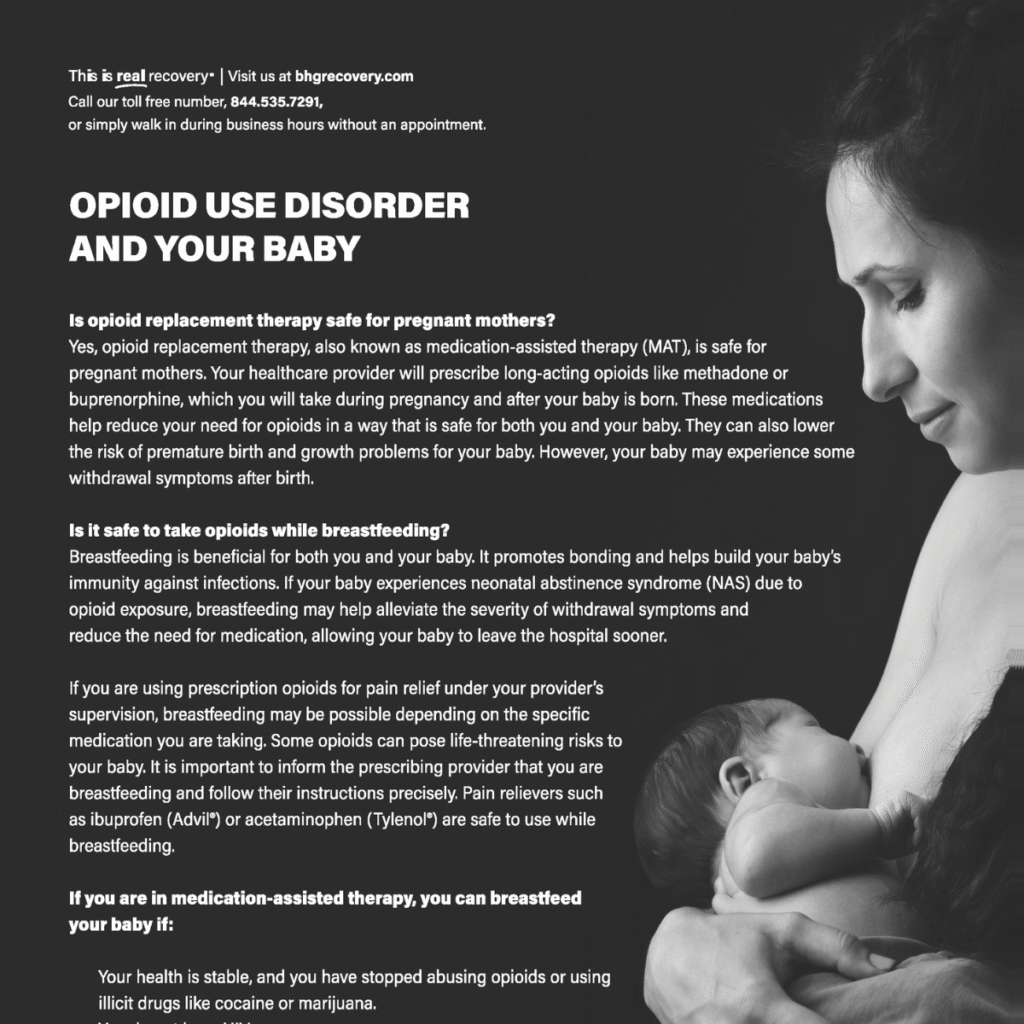
Flyer: Opioid Use Disorder and Your Baby

Opioid Use Disorder and Pregnancy: What You Should Know
Pregnancy can bring excitement, uncertainty, and many questions – especially if you are navigating opioid use disorder (OUD). If you’re receiving care or considering treatment, you may wonder how it affects your baby and what steps you can take to support a healthy start.
The most important thing to know is this: staying engaged in care is one of the safest choices you can make.
When properly supervised by medical professionals, treatment for OUD helps stabilize your health and reduce risks associated with untreated substance use. Consistent care during pregnancy supports better outcomes for both mother and baby. It also creates structure and accountability during a time when your health matters more than ever.
Newborns may need additional monitoring after birth if exposed to opioids during pregnancy. This does not mean you have failed. It means healthcare providers are taking extra steps to ensure your baby receives the right support. With appropriate care and follow-up, most infants do well.
We understand that pregnancy and opioid treatment require thoughtful, coordinated care. Our team works alongside obstetric providers and other healthcare professionals to support you throughout pregnancy and beyond. We focus on compassionate, evidence-based treatment that prioritizes safety, dignity and long-term stability.
We also recognize that recovery during pregnancy isn’t only about medical visits. It’s about building confidence, strengthening support systems, and preparing for life after delivery. Whether you are early in pregnancy or preparing to welcome your baby soon, you deserve care that meets you where you are.
If you have questions about pregnancy and opioid treatment, talk openly with your care team. Honest conversations lead to safer plans – for you and your baby.
You are not alone. With the right support, healthy outcomes are possible.