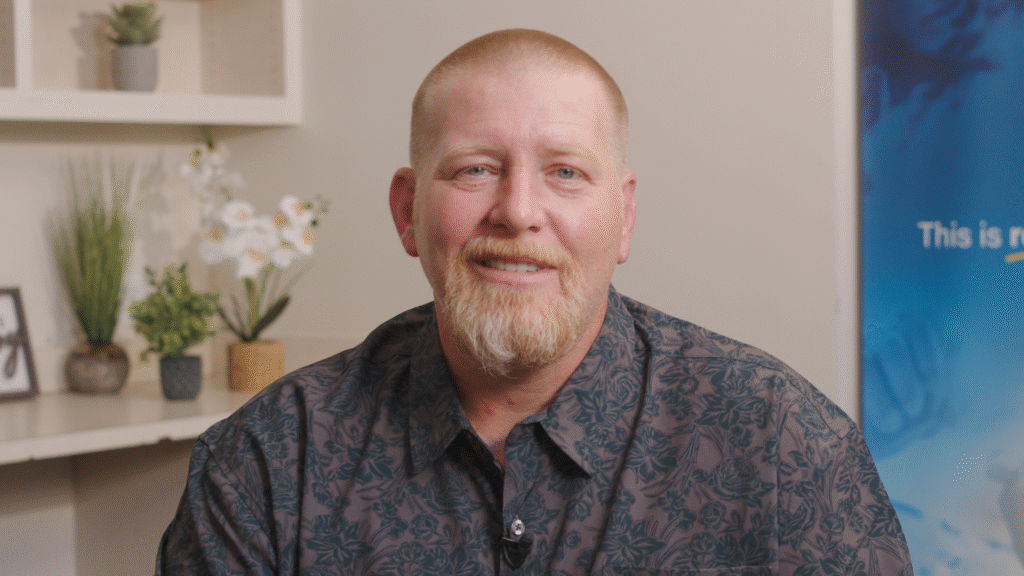
Caleb’s Recovery Story
Caleb’s Recovery Story: how compassionate addiction treatment at BHG helped Caleb begin recovery, make healthy changes and rebuild his life.

Recovery did not happen overnight for Caleb. His story is one of struggle, change and hope. In this video, Caleb shares how addiction affected his life, how opioid use took hold and how treatment at BHG helped him move forward. He also talks about the value of outpatient care, the support he found through counseling and the lifestyle changes that helped him build a healthier future.
Addiction Was Part of Caleb’s Story Early On
Caleb grew up around addiction. His grandmother and father both struggled with alcoholism, so substance use was part of what he saw from an early age. As he got older, he began using marijuana and alcohol himself. At the time, he considered himself a functioning addict. Even though substance use was part of his life, he was still trying to manage daily responsibilities and keep going.
An Injury Led to Opioid Use
Caleb’s life changed after he was injured and introduced to opioids. What may have started one way slowly became much more serious. Over time, his opioid use progressed and eventually led to intravenous heroin use. Like many people, Caleb found himself caught in a cycle that became harder and harder to break.
A Friend Helped Him Find a New Path
A turning point came when a friend intervened and introduced him to BHG. That moment gave Caleb a chance to take a different path. It opened the door to treatment, support and a new way forward.
Treatment Helped Him Build Stability
At BHG, Caleb began treatment with methadone and started focusing on recovery one step at a time. He also talks about the importance of counseling as part of his treatment. Counseling gave him support, helped him better understand himself and gave him tools to make positive changes. His story shows that recovery is not only about medication. It is also about doing the personal work that supports long-term progress.
Outpatient Care Made Recovery More Realistic
One of the biggest benefits Caleb highlights is the flexibility of outpatient treatment. He was able to continue working while receiving care, which helped make recovery feel possible and sustainable. For many people, that flexibility can make a real difference. Being able to stay connected to work and daily life while getting treatment can help people stay engaged in care and keep moving forward.
Lifestyle Changes Supported His Recovery
Caleb also emphasizes the importance of making healthy lifestyle changes. Recovery meant more than stopping substance use. It meant creating new habits, focusing on his health and making choices that supported the life he wanted to build. Along with medication and counseling, those lifestyle changes became an important part of his progress.
Grateful for Recovery and Focused on the Future
Today, Caleb is grateful for recovery and for how far he has come. He is focused on living a healthier life and building the future he wants. His story is a powerful reminder that recovery is possible and that the right support can help people move from addiction to hope.