


Why We’re Here
Meeting the Addiction Crisis with Proven Care
For 20 years, Behavioral Health Group (BHG) has been raising the standard for substance use disorder treatment nationwide. Our mission is simple: help people reclaim their lives through evidence-based, patient-centered care delivered with compassion and respect.

Setting the Standard for Outpatient Addiction Treatment
We believe addiction treatment should reflect the highest standards in healthcare —grounded in science, focused on safety and driven by meaningful outcomes.
As a national leader in addiction medicine, our evidence-based model combines FDA-approved medications, behavioral counseling, case management, and wraparound services tailored to each patient’s goals and stage of recovery.
With more than 1,900 employees and treatment centers across 20+ states, BHG is the largest Joint Commission-accredited outpatient opioid treatment network in the U.S. Every BHG location maintains active federal, state and DEA licensures. By offering OTP (opioid treatment programs), OBOT (office-based opioid treatment) and Medical Services across multiple high-need markets, we provide a wholistic approach that supports each patient’s evolving recovery journey and leads to stronger engagement and better outcomes.
This scale allows us to deliver consistent, high-quality care, share best practices and measure what matters.
Among our 42,000+ daily patients
- 99% report an improved quality of life
- 83% report a decrease in substance use
- 60% secure employment within their first year of treatment
Understanding the Challenge
Despite more than 48 million people living with a substance use disorder, treatment remains out of reach for many. Of the 50.1 million adults who needed treatment care in 2024, only 9.5 million received it – about one in five. Stigma, limited access, financial concerns and a lack of integrated behavioral healthcare keep many from getting the support they need. Others may not recognize that treatment could help or are not ready to reach out.
Substance Use Disorder

Source: SAMHSA 2024: Companion Infographic Report: National Surveys on Drug Use and Health (2021-2024), p. 10
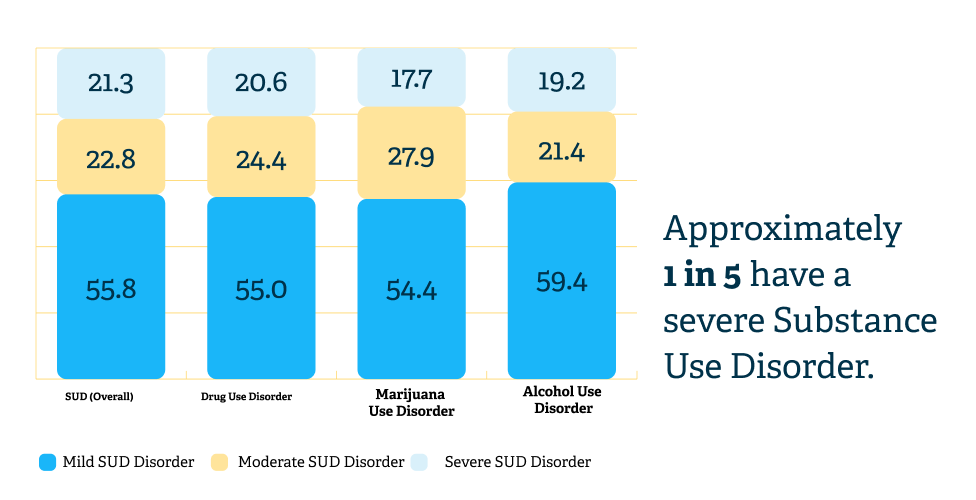
Substance Use Disorder Severity Distribution (%)
Source: SAMHSA 2024, p.28
Past Year or Past Month Substance Use (Adults 18+, 2024)

Source: SAMHSA 2024, p.36
Treatment in the Past Year: Among Adults Aged 18 or older with Past Year Substance Use Disorder and Any Mental Illness

Source: SAMHSA 2024, p. 55
Why aren’t people getting treatment?
- Denial and stigma prevent intervention
- Limited availability of evidence-based treatment
- Co-occurring mental health disorders go untreated
- Emergency rooms and justice systems often serve as default entry points
Of the people who could benefit from treatment but did not receive it, an overwhelming 93% of people did not perceive they needed it. More detailed reasons include:
- Thinking they should have been able to handle their drug or alcohol use on their own (75%)
- Not being ready to start treatment (65%)
- Not being ready to stop or cut back on using alcohol or drugs (59%)
How does this impact healthcare costs and communities?
People with SUDs often have a complex mix of medical and behavioral health needs. As a result, the cost and societal burden shifts to hospitals, law enforcement, employers, schools and families, placing strain on communities and fueling cycles of crisis instead of recovery.

Source: KFF analysis of the T-MSIS Research Identifiable Files, 2020
Why is BHG Different
One-Stop Shop


BHG comprehensive approach to opioid care is being expanded in select pilot locations to include a broad range of substances, responding to the changing addiction trends and needs of society.
Evidence-Based Care
As a national leader in defining best practices, our treatment model helps patients stay engaged in treatment, reduce illicit opioid use, lower overdose risk and restore stability.
Integrated Treatment Approach
Our continuum includes medications for opioid use disorder (MOUD), evidence-based counseling including cognitive behavioral therapy (CBT), medication management and coordinated care to address all drivers of addiction.
Comprehensive Medication Options
BHG is among only 4.2% of programs² nationwide offering all three FDA-approved opioid treatment medications—methadone, buprenorphine and naltrexone—giving clinicians the tools to personalize care for every patient.
Agile & Accessible
We accommodate walk-ins, streamline intake processes, offer multiple clinical pathways and prioritize therapeutic dose stabilization to meet patients’ needs quickly and effectively.
1 Source: Key Substance Use and Mental Health Indicators in the United States: Results from the 2024 National Survey on Drug Use and Health, SAMHSA 2024
2 Source: Medications for Opioid Use Disorder Improve Patient Outcomes, Pew 2020